Fit for the future
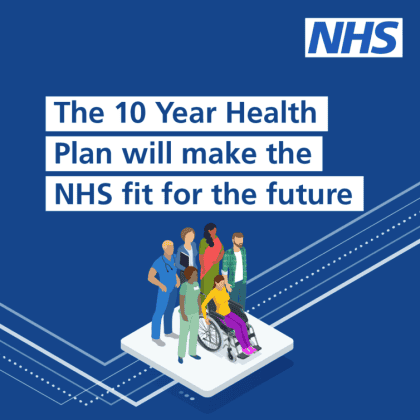
The 10 Year Plan for Health and Social Care marks a radical commitment to transform our healthcare system in the UK. It closely reflects our vision of transforming how people manage their health in their communities so we all live happier lives.
Responding to change
With opportunity comes challenge — and major change also carries risk. The plan’s vision of a neighbourhood-led health service is only possible if General Practice is strong and thriving at its centre. That’s why we focus on helping practices flourish — so services stay rooted in local needs and build on the strengths already present in our communities.
Our tailored approach
We work to ensure General Practice can lead this change and remain sustainable. From our experience with Primary Care Networks (PCNs), we know leadership requires different levels of support depending on local context. We provide the right support at the right time — enabling practices to lead well and thrive.

What this means for General Practice…
From hospital to community
- More care will be available on people’s doorsteps and in their homes.
- We ensure that General Practice is resourced and ready to take on the left shift — the transfer of activity and funding from hospitals into community-based care.
From analogue to digital
- New technology will liberate staff from admin and allow people to manage their care as easily as they bank or shop online.
- We recognise that this shift is as much about behaviour change as it is about technology development — and we are committed to supporting both.
From sickness to prevention
- Reaching patients earlier and making the healthy choice the easy choice.
- Creating the conditions for health is fundamental to our ethos, and we bring experience and specialist expertise to this area.
How we’re supporting this transformation…
Our vision, which we’ve held for the last five years – “to transform how people manage their health in their communities so we all live happier lives” means that we have many examples of where we have worked with General Practice and beyond to achieve the shifts the 10 Year Plan asks for. We’re sharing these examples here and will continue to update this as work progresses.
Ending the 8am phone scramble – same day digital
We’re supporting practices to implement online triage systems that help manage demand, maximise capacity, and assess patient needs at first contact — so patients reach the right person, at the right time, the first time. This support is delivered through our CURA Access service.
As part of this, we’ve developed resources on managing uncapped access, including a webinar available on demand. You can request the slides and recording, or speak directly with a member of our team for tailored support — available to both members and non-members.

GP-led neighbourhood health service
- We provide management support to Neighbourhood Leadership Teams, helping them build the capacity and structures needed to thrive. Through our Leadership Development programme, we equip leaders with the skills, insights and confidence to shape culture, work collaboratively across organisations, and drive real progress — building shared ownership rather than hierarchy.
- We have facilitated citizen and professional workshops in East Surrey, bringing staff and residents together to focus on what’s strong — not what’s wrong — in their communities. These conversations have grown into the Neighbourhood Health and Wellbeing Networks, strengthening local collaboration and embedding community voices in health planning.

Neighbourhood health centres in every community
We’ve been delivering this vision for the last four years at the Horley Health Hub, where flexible space for clinical, non-clinical and community use demonstrates the real impact of neighbourhood health in action. The hub has gained national attention as an example of best practice and is now home to a growing number of community groups and health initiatives.
Looking ahead, we can support partners to develop their own centres — from preparing capital bids to shaping estates plans, drawing on our experience of using NHS estate planning tools with Primary Care Networks.

Redesigning outpatients and diagnostic services
We see significant opportunity in working with acute partners to reshape planned care delivery. Through ongoing conversations with commissioners and acute providers, we’re ensuring that the left shift of activity brings resource into General Practice — enabling practices to be involved where they want to be and ensuring they have the support needed to deliver care closer to home.

Redesigning UEC and emergency care – routes from 111
We deliver integrated urgent care services in partnership with Surrey and Sussex NHS Trust and with NHS Sussex through our Additional Primary Care Service. Managed effectively, these models can ease the burden on practices while ensuring patients receive timely, appropriate care in the right setting.

Complex needs – care planning
We led the development of Anticipatory Care Hubs (previously known as Frailty Hubs) in East Surrey five years ago, and continue to see the benefits of clear GP leadership and genuinely integrated multi-disciplinary working. These hubs bring professionals together weekly to provide holistic care for people with complex and long-term conditions — supporting independence, preventing deterioration, and reducing hospital admissions.
Our Frailty Lead, Dr Michael Bosch, remains central to ongoing developments in Surrey, while in Sussex we are supporting the Primary Care Provider Collaborative to expand anticipatory and frailty-focused care. Alongside this, our teams contribute to the Ageing Well initiative — transformational work that shares best practice, reduces hand-offs, and keeps patients at the centre so that care is proactive, integrated and compassionate, enabling people to live at home for as long as possible and die well.

From sickness to prevention
We are proud to have supported Dr Gillian Orrow in founding Growing Health Together in 2020. This nationally recognised initiative demonstrates the impact General Practitioners can have as community convenors — connecting individuals, groups and statutory providers to create the conditions for health.
An independent review has shown the benefits of this approach for both system costs and patient outcomes.

Health coaching in practice
We support practices to employ and engage Health and Wellbeing Coaches and to adopt digital solutions such as the Holly Health coaching service. These provide personalised, evidence-based interventions in General Practice — helping people make positive behaviour changes, improving population health, and reducing demand on primary care.

Improving cervical screening uptake
We work with practices on bespoke quality improvement programmes that combine patient engagement, awareness and education campaigns, and staff training. Our aim is to boost cervical screening uptake and tackle health inequalities — supporting the NHS ambition to eliminate cervical cancer by 2040.

NHS App as the front door
We help practices make the NHS App their main patient gateway. This includes delivering patient-facing campaigns, running in-practice and community sessions, and upskilling Patient Participation Groups — all to build confidence and understanding so patients can access services quickly and appropriately.

Using proven tech to boost productivity
-
Our dedicated IT team has expert knowledge of the main General Practice systems — EMIS and SystmOne — and upskills staff through regular webinars and practical guidance, helping them use technology more confidently and effectively.
-
Through our CURA laptop leasing service, we provide cost-effective, fully managed, DSPT-compliant devices. These give locums and self-employed healthcare professionals secure, instant access to clinical systems — reducing delays and enabling them to work productively wherever they’re needed.
-
We are working with Healthy Horley PCN, a digital frontrunner in Surrey Heartlands, to pilot the use of Ambient Voice Technology (AVT) for referral processes and cross-organisational communication. The aim is to reduce administrative burden, improve efficiency, enhance patient journeys, and enable greater collaboration between primary and secondary care.